There is a verse of Indonesia Raya most of us have never sung.
It sits in the third stanza, and it is a promise: to keep the land, the seas and the people. All of it.
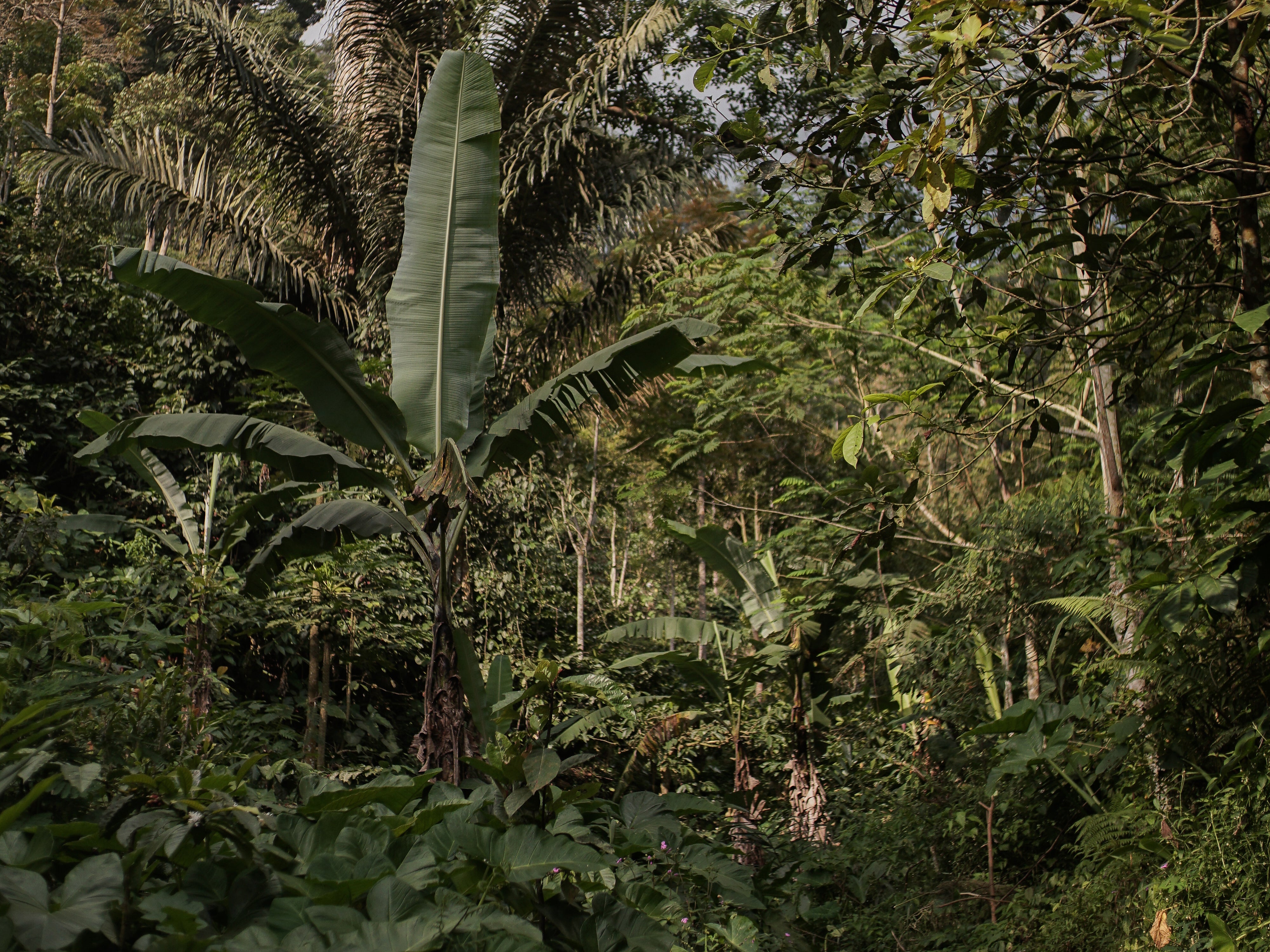
This year has tested that promise. Fires burned from Kalimantan to Papua, haze drifted across borders, and every morning brought harder news. So we asked two Indonesians who chose to come home to write to Ibu Pertiwi.
Farwiza Farhan protects the forests of Aceh. Prio Sambodho studies how a nation cares for its people. Their letter is an apology for the promises we have broken, and a reason to keep trying.
If hope has felt far away this year, this one is for you.
Dear Ibu Pertiwi,
If we sang our national anthem in its full composition, we would find these words in its third stanza:
Indonesia, tanah yang suci,
Tanah kita yang sakti,
Di sanalah aku berdiri,
Jaga ibu sejati.
Indonesia, tanah berseri,
Tanah yang aku sayangi,
Marilah kita berjanji,
Indonesia abadi.
Selamatlah rakyatnya,
Selamatlah putranya,
Pulaunya, lautnya, semuanya.
Imbued in these words is a promise. To protect our land, our seas, our people, our everything. A promise woven into our national pride and identity. Yet, we have not lived up to this promise.
As two Indonesians who chose to come home after years of studying and working abroad, returning was not simply an option. It was a conscious choice, one that came with the belief that our education, experience, networks, and expertise could somehow help us make a difference.
But lately, those beliefs have come under assault.
Last year, it was the floods that swept through Aceh. This year, the earthquake that shook NTT, followed by months of relentless forest fires burning through Kalimantan, Sumatra, all the way to Papua, sending choking haze across Southeast Asia.
As all this unfolded, we watched the stock market tumble and the Rupiah weaken, while economic uncertainty continued to grow.
Then throw political turmoil into the mix. Straight out of Game of Thrones.
The feeling of helplessness was palpable. As if nothing we did could make any difference. It feels like death by a thousand cuts.
Someone once said that Indonesia is such a disappointing country. Those who look at the enormous potential of this great nation are disappointed that it never seems to live up to its promise. Yet those who expect it to collapse under the weight of its own corruption and cronyism are equally disappointed that it somehow hasn't (yet).
But as they say, when you hit rock bottom, there is nowhere to go but up.
At least, that is what we would like to believe. That perhaps this journey to the bottom will finally force us to climb.

But here is the thing about this climb. We cannot do it alone.
Perhaps one of the greatest casualties of these relentless crises is not just the forests we have lost, the rivers we have polluted, or the communities devastated by disasters. It is our collective sense of hope. Our belief that we can still make a difference.
And when that hope disappears, we retreat into ourselves. We focus on surviving, on protecting whatever little corner of the world we can still control. We begin to believe that nothing we do matters, so why bother trying?
Yet perhaps this is precisely the moment when we need to do the opposite. To reach out, to find one another, and to rediscover the strength that comes from being part of something bigger than ourselves.
Because despite everything, there are still people who refuse to give up. Communities defending their forests, young people demanding accountability, neighbours showing up for each other when disaster strikes, and ordinary Indonesians doing extraordinary things simply because they care.
These may seem like small acts against the enormity of the challenges we face. But perhaps that is how change begins. With small islands of hope, of people finding one another, building trust, and slowly becoming something bigger.
After all, we are a nation of more than seventeen thousand islands. We should know a thing or two about how seemingly separate places can belong to something greater.

So, what is left for us to give to Ibu Pertiwi?
Perhaps more than we think.
We still have our time, our knowledge, our voices, our ability to care, and most importantly, one another. We can give our courage when it is easier to remain silent, our solidarity when it is easier to look away, and our commitment to protect what remains while restoring what has been damaged.
Do we repair, or do we start over?
Perhaps we need to do both. To repair what we have broken, while starting over in how we see our relationship with nature and with each other. To remember that the earth does not exist simply to sustain our ambitions, and that our responsibility is not merely to take less, but to give back.
And where do we begin?
Perhaps by abandoning the idea that we must first change the world before our actions can matter. We begin wherever we are, with whatever we have, and with whoever is willing to stand beside us.

We begin by finding each other again.
Because hope is not the naive belief that everything will somehow turn out fine. It is the conviction that what we do still matters, even when the odds seem impossible. And perhaps hope is not something we wait to feel before taking action, but something we create together through the act of trying.
So, dear Ibu Pertiwi, this is not just a letter of apology for the promises we have broken. It is also a reminder to ourselves that we are not yet done trying.
We may not be able to undo everything that has happened. But there is still so much worth protecting, so much worth rebuilding, and so much worth fighting for.
And trusting that one day, when we sing Indonesia Raya, we will sing it in its full composition, and when we say Selamatlah rakyatnya, Selamatlah putranya, Pulaunya, lautnya, semuanya. We really do mean it.
Because the story of this pertiwi is still being written. And we still have a say in how it ends.
Farwiza Farhan is a forest conservationist and environmental activist, known for her work on Advocacy and Education on Conservation, Forest and the Environment in Aceh. Prio Sambodho is a researcher and lecturer, focusing on poverty, social development, political economy, social protection governance, and urban social development toward an inclusive society.
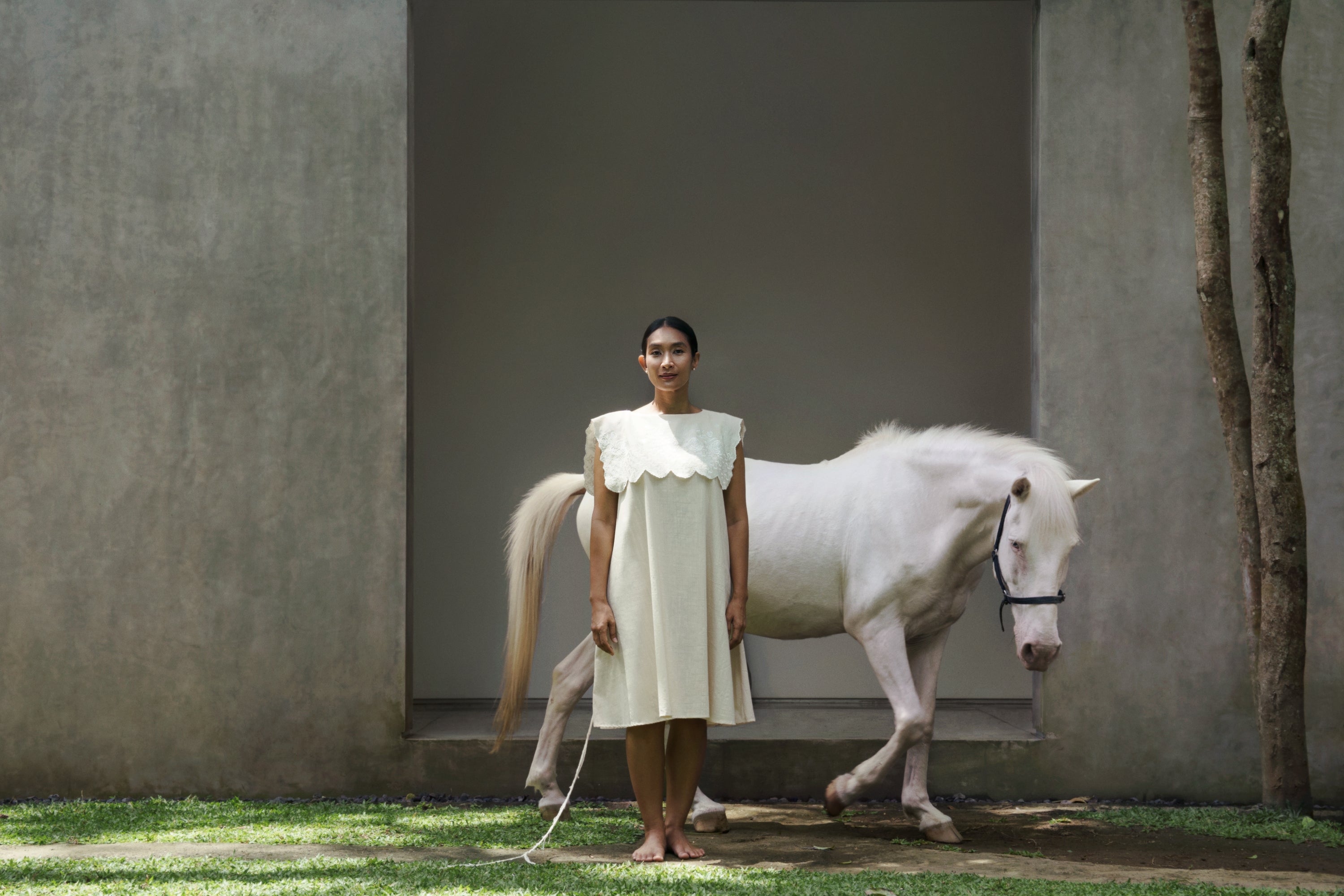
She wore Beskap in Angkasa, Canvas Overshirt in Ikatan (Pagi), Constellation Throw in Angkasa, and Embroidered Kebaya Vest in Kapas.
Prio wore Beskap in Anyam, Canvas Overshirt in Ikatan (Malam), and Structured Shirt in Kapas.